WinWon Intelligience

AI Recruiting Built for Every Sport: From Basketball and Baseball to Volleyball, and Beyond

College recruiting has never moved faster. The transfer portal, NIL landscape, early signing periods, and evolving NCAA regulations have created an environment where speed, organization, and genuine relationship-building determine which programs land the student-athletes who define their rosters. 

For coaches across basketball, baseball, softball, volleyball, tennis, lacrosse, and track & field - at every level, from Power Four to NAIA - understanding modern recruiting fundamentals isn't optional. It's the job.
What This Article Covers: 
The Modern College Football Recruiting Landscape
Understand how the transfer portal, NIL opportunities, early signing periods, and evolving NCAA rules have reshaped recruiting. Learn why speed, organization, and year-round systems now determine success.
Building a Recruiting System (Not Just Effort)
Discover how top programs create structured processes for identifying prospects, tracking communication, and managing staff coordination across high school and portal recruiting cycles.
Prospect Identification and Evaluation
Learn how to evaluate beyond star ratings, focusing on scheme fit, character, academic readiness, long-term development, and cultural alignment within your program.
Transfer Portal Strategy
Master the fast-moving portal cycle. Pre-identify roster needs, compress evaluation time, and build processes that allow you to contact and close impact transfers quickly.
Communication and Relationship Building at Scale
See how successful programs personalize outreach across hundreds of prospects without losing authenticity, using structured texting, consistent follow-up, and staff alignment.
Using Technology to Gain a Competitive Edge
Explore how modern recruiting platforms and AI tools streamline research, centralize data, and eliminate administrative friction, so coaches can focus on relationships and closing.

Want to Learn More About WinWon?

Meet With WinWon

Understanding the Modern Recruiting Timeline

The recruiting calendar has compressed dramatically across every college sport. High school prospects commit earlier than ever, portal windows open and close within days, and the competition for every meaningful target has intensified at all levels of competition.

What used to be a seasonal activity has become a year-round operation. Basketball programs evaluate AAU prospects in the summer while managing fall portal entrants simultaneously. 

Baseball and softball coaches juggle high school pipelines, JUCO targets, and four-year transfers across overlapping timelines. Volleyball coaches build relationships with prospects who won't sign for three years while responding to portal opportunities that close in a week

.The programs that thrive in this environment are working through better systems. Centralized pipelines, shared staff visibility, and technology that eliminates administrative friction allow coaches to focus on what actually moves recruits: authentic relationships, compelling program visions, and consistent personal communication.

Coaches who treat recruiting as a continuous process consistently outperform those who only ramp up during designated periods. The best recruiters are always recruiting, and they need infrastructure that makes that sustainable without burning out their staff.

Identifying Student-Athlete Fits Beyond the Numbers

Every coach knows that rankings, times, and highlight reels don't tell the complete story. Effective recruiting starts with a clear understanding of what your program actually needs, on the court, the field, the track, and in the locker room.

This means evaluating prospects across multiple dimensions: athletic ability, character, academic preparedness, coachability, and cultural fit. It means gathering intelligence from high school and club coaches, attending showcases and tournaments in person, reviewing academic records early, and having direct conversations with prospects and their families to assess maturity and motivation.

The best recruiters develop instincts for which players will develop and which will plateau, and they trust those instincts even when a prospect's ranking or performance mark doesn't match the projection. A three-star athlete who's a perfect scheme and culture fit will outperform a higher-rated talent who doesn't belong in your system.

This principle holds across every sport. The volleyball libero who fits your defensive system is more valuable than a decorated outside who can't adapt. The 400-meter runner whose work ethic matches your program culture will outperform the faster recruit who doesn't buy in. Fit is the variable that rankings don't measure, and the coaches who evaluate it best win more recruiting battles than those who chase ratings alone.

Sport-by-Sport: What AI Recruiting Looks Like in Practice

Basketball

Basketball recruiting operates at the highest velocity of any college sport. The live evaluation period during AAU season, combined with early signing windows and graduate transfer portal activity, means coaches are managing multiple parallel pipelines year-round. 

Programs that can surface a player's context, build a profile, and initiate personalized outreach within hours of an evaluation will win commitments that slower programs lose.

When a high-priority guard enters the portal, the first three calls often determine the outcome. Staff alignment is equally critical: when the head coach and assistants are working from the same shared recruiting board, no conversations fall through the cracks between evaluation events and scholarship decisions.

AI tools that compress research time - pulling stats, social media context, and film references into a clean profile instantly - give basketball programs a direct competitive advantage in a sport where hours matter.

Baseball

Baseball recruiting is defined by its complexity. Coaches simultaneously manage high school players committing as early as their sophomore year, JUCO transfers who need to contribute immediately, and portal players from four-year programs, all while mapping needs position by position, graduation year by graduation year.

Most baseball programs run these overlapping pipelines with limited staff. When a shortstop enters the portal, a coach needs to quickly evaluate their stats and depth chart fit, then initiate contact, all without disrupting the 150-player high school pipeline already in motion. Centralized recruiting boards that separate prospect pools while keeping all communication history in one place aren't a luxury for baseball programs. They're how the work gets done.

Showcases and fall tournaments generate high volumes of new contacts that need to be captured instantly. Programs that can turn a camp conversation into a structured recruit profile before the drive home, then follow up with a personalized text the next morning, consistently build stronger early-stage relationships than those relying on scattered notes and memory.

Softball

Softball recruiting has become a national market, with elite programs drawing prospects from across the country through travel ball circuits, showcases, and summer tournaments. These concentrated evaluation windows create a post-event follow-up dynamic where response speed is a major differentiator, prospects met at a showcase on Saturday expect meaningful contact by Monday.

Position pipelines matter enormously in softball. A program that's built around pitcher development recruits pitchers differently than one focused on offensive production. AI-driven prospect profiles that include position-specific context allow coaches to personalize their outreach immediately rather than sending generic messages after events.

Parents play an especially significant role in softball recruiting. Families want to understand development philosophy, academic support, and program culture, not just the offer. Programs that communicate consistently, personally, and with genuine detail about what a student-athlete's experience will look like build the trust that closes commitments. Often with the family as much as the athlete herself.

Volleyball

Volleyball has one of the earliest recruiting timelines in college sports. Top programs identify and build relationships with prospects as young as eighth or ninth grade.

This long runway creates both opportunity and risk: programs that invest in early relationship management close elite commits years later, while those without a system for long-term prospect tracking lose players before they're seniors.

The club volleyball circuit is the primary evaluation arena. With major events drawing hundreds of coaches and thousands of athletes, the ability to efficiently capture contact information, create instant prospect profiles, and follow up with personalized communication the next morning is a tangible competitive advantage.

Position-specific recruiting is especially important. Setters, liberos, and outsides require completely different evaluation criteria and development pathways.

Programs that communicate this specialization directly, that show a prospect exactly how she fits the system and what her development path looks like, build rapport that generic outreach never achieves.

Tennis

Tennis recruiting is uniquely global. Top programs recruit from Europe, South America, and beyond, which means managing communication across multiple time zones and cultural contexts with typically lean recruiting staffs. 

The challenge of maintaining consistent, personalized contact with international prospects is real, and programs that solve it operationally maintain a meaningful edge over those managing international pipelines through scattered texts and email threads.ATP/WTA rankings and ITF junior ratings provide clear objective benchmarks, but evaluation still requires understanding how a recruit's game translates to the college format: dual matches, team dynamics, and doubles pairings that don't exist in individual junior competition. Coaches who build profiles that include this contextual layer move faster and communicate more credibly.

Communication frequency matters enormously with international recruits. Programs that maintain regular, meaningful touchpoints, and make a prospect feel genuinely wanted from 5,000 miles away, convert far more cross-border commitments than those who only reach out around official visit time.

Lacrosse

Lacrosse recruiting has historically concentrated in the mid-Atlantic and Northeast, but the sport's rapid national growth has expanded the prospect pool significantly.

Programs now evaluate players from regions where lacrosse infrastructure is newer, which requires broader evaluation frameworks and more projection than traditional recruiting in established hotbed areas.

Club showcase events create the same high-volume, time-compressed evaluation dynamic found in volleyball and softball. The ability to identify 30 prospects worth following at a tournament, capture their information instantly, and have personalized follow-up messages sent before you leave the facility is the kind of operational advantage that compounds over a full recruiting cycle.

Lacrosse also has one of the highest coach-to-player communication ratios in recruiting. Coaches build genuine personal relationships through consistent contact that feels real. Tools that enable scale without sacrificing that personal feel are especially valuable in a sport where the relationship itself is the pitch.

Track & Field

Track and field recruiting is built on objective performance data: times, marks, and distances create clear benchmarks that other sports don't have. But the volume is unlike any other program. A single staff might evaluate hundreds of athletes across a dozen events simultaneously, each with different performance thresholds, development trajectories, and roster gaps to fill.

The challenge is efficiently managing the research, communication, and pipeline for a recruiting class that spans sprinters, jumpers, throwers, distance runners, and multi-eventers at the same time. Without a centralized system, assistant coaches working independent event groups create inevitable silos where the head coach loses visibility into the full class picture, leading to position groups that are over-recruited while other areas have gaps.

Transfer portal activity in track and field has increased significantly. Coaches who have pre-identified positions of need and can move immediately when a high-caliber athlete becomes available consistently fill roster gaps faster than programs still sorting out their evaluation process when the portal opens.

Building and Managing Your Recruiting Pipeline

A recruiting pipeline is only as strong as the system that organizes it. Too many programs lose momentum because prospect information lives in scattered spreadsheets, text threads, and assistant coaches' memories. When staff turnover happens or a recruiting coordinator gets pulled in multiple directions, critical details disappear.

Modern recruiting demands centralized tracking. Every touchpoint with a prospect, amp conversations, text exchanges, phone calls, unofficial visits, evaluation notes, should be documented and accessible to the entire staff. This shared visibility prevents duplicate outreach, ensures consistent messaging, and allows head coaches to see exactly where each recruit stands without hunting for updates.

Platforms like WinWon help programs centralize recruiting intelligence, automatically capturing interactions and creating shared recruiting boards so assistants and coordinators stay aligned. When everyone can see who's been contacted, what was discussed, and what needs to happen next, follow-through improves and fewer recruits slip through the cracks.

Mastering Communication and Personalization at Scale

In college recruiting, relationships still matter more than anything else. Student-athletes commit to programs where they feel seen, valued, and genuinely prioritized. But with recruiting pipelines that can range from hundreds of targets at smaller programs to thousands at larger ones, plus transfer portal targets running parallel to high school pipelines, coaches face a real challenge: how do you maintain personal connections with that many recruits simultaneously?

The answer lies in structured communication that feels personal. Texting has become the primary channel for staying connected with recruits, but mass generic messages get ignored. Successful programs send texts that reference specific details, a recent performance, a position-specific skill, a previous conversation, so every message feels one-to-one even when sent to multiple prospects.

Recruits and their families expect regular, meaningful contact. Programs that go silent for weeks or send generic updates lose ground to competitors who maintain consistent, personalized outreach. The medium matters, too: a text from a position coach's real number reads completely differently than an automated message from a university recruiting address.Tools that enable personalized mass texting from a coach's actual number help programs scale outreach without sacrificing authenticity. 

When recruits see a text from the coach's real phone with their name and relevant details included, response rates improve dramatically, because it feels like what it should feel like: a coach who knows them reaching out personally.

WinWon's platform allows coaches to send personalized texts at scale while keeping every conversation thread attached to the prospect's profile, so follow-up stays contextual and timely regardless of how many recruits are active in the pipeline.

Navigating the Transfer Portal Effectively

The transfer portal has fundamentally changed college recruiting across every sport. Programs now have access to experienced, college-ready players who can contribute immediately, but the window to evaluate and close these prospects is narrow in ways that traditional high school recruiting doesn't prepare coaches for.

Portal windows create intense, compressed competition for talent. Coaches who excel in the portal era operate with clear processes: they pre-identify positions of need, maintain relationships with players at other programs throughout the year, and have evaluation criteria ready so they can move within hours when someone enters the portal.

The biggest mistake programs make is waiting too long to reach out. By the time you've spent two days gathering film and background information, elite portal prospects have already been picked up by faster-moving programs. The best programs use technology to compress research time, pulling stats, film context, and background information rapidly so they can reach out the same day, not three days later.

Portal recruiting also requires managing expectations differently than high school recruiting. Transfer prospects often visit campus during the academic year, meet with position coaches immediately, and make decisions within a week. Your pitch needs to be ready, your campus visit plan needs to be tight, and your offer needs to be clear from the very first conversation.

Leveraging Technology Without Losing the Human Element

Recruiting technology has evolved far beyond basic databases. Today's tools can surface prospect information in seconds, automate administrative tasks, and provide analytics on recruiting performance across your entire pipeline. But technology should enhance relationships, not replace them.

The most effective recruiting systems handle repetitive work, prospect research, contact logging, follow-up reminders, so coaches can focus on the high-value activities that actually close recruits: building trust, making compelling pitches, and demonstrating genuine care for a student-athlete's development and future.

Building a Staff Culture Around Recruiting Excellence

Recruiting is a team effort, but it rarely functions that way. Position coaches operate independently, coordinators lack visibility into who's being targeted and where, and graduate assistants keep their notes in personal files. This siloed approach creates inefficiency and missed opportunities at every level.

High-performing programs treat recruiting as a coordinated operation. They hold regular meetings where every coach knows the status of key targets. They establish clear role definitions so responsibilities don't overlap or create gaps. Most importantly, they use shared systems that make recruiting progress transparent across the entire staff.

When recruiting data lives in one accessible place, staff alignment improves and follow-through becomes automatic. Coaches don't have to ask "Who talked to this kid last?" or "Did we follow up after that tournament?" The answers are always visible. That visibility is especially critical when managing large, complex classes across multiple position groups and prospect pools simultaneously.

Measuring Recruiting Success Beyond Rankings

Recruiting rankings and performance ratings matter, but they don't tell the complete story. A highly rated class that doesn't fit your system or culture won't produce wins. Smart programs measure recruiting effectiveness through multiple lenses: hit rate on top targets, retention rates, on-field production, and academic success over time.

The best coaches also track process metrics: response rates to outreach, conversion rates from camp or tournament to offer, and time-to-close on committed prospects. These indicators reveal whether your recruiting system is functioning efficiently or wasting effort on strategies that aren't working. Programs that treat recruiting as a data-informed operation make better decisions about where to invest time and resources each cycle.

Good Recruiting Is a System

College recruiting will always require hard work, genuine relationship-building, and authentic care for student-athletes. But effort alone isn't enough anymore, not in basketball, not in softball, not in track and field, not anywhere.

The programs that consistently win recruiting battles, whether they're competing for five-stars at the Power Four level or building competitive rosters at NAIA, are the ones that build systems. Structured processes for identifying the right prospects. Organized methods for tracking relationships across an entire staff. Technology that eliminates administrative friction without stripping out the human element that makes recruiting work.

Centralize your information. Empower your staff with shared visibility. Communicate personally at scale. Use technology to handle the work that doesn't require a human touch, so the humans on your staff can focus on what actually wins commitments.

WinWon helps college coaches find better student-athlete fits faster and keep every recruiting conversation organized, automatically. Navigate the transfer portal, text from your own number, and keep your entire staff aligned, without changing how you coach. Mobile-first. Relationship-first.

AI Student-Athlete Recruiting That Turns Conversations Into Commitments

Learn how college coaches are using AI in student-athlete recruiting workflows, without losing the personal touch. These guides cover practical playbooks for transfer portal recruiting, keeping your staff aligned, and turning prospect conversations into commitments when recruiting moves fast.
AI Student Athlete Recruiting Hub

Read More

College Athlete Recruiting Hub
A centralized starting point for student-athlete recruiting. Learn how college coaches are using AI in student-athlete recruiting workflows, without losing the personal touch.

Student-Athlete Recruiting Fundamentals for College Coaches

Read More ⟶

The complete guide to modern college sports recruiting
Identifying student-athletes, building communication strategies, managing your recruiting pipeline, and navigating the transfer portal era. Learn how top college coaches build recruiting systems that scale.

Recruiting CoPilot: Built for the Transfer Era

In modern college recruiting, speed and follow-through win, but most staffs are still operating across tabs, texts, and spreadsheets.

CoPilot brings recruiting into one system so your staff moves faster without losing the human side of the relationship.

“It’s not just organization—it’s peace of mind. We’re structured, but still flexible enough to recruit creatively and build relationships the right way.”

Brad Neffendorf, Head Baseball Coach, Louisiana State University Shreveport (LSUS)

How WinWon Supports Modern College Sports Recruiting

Finally, One Recruiting Source of Truth for Your Staff
AI Recruiting Search Built for Coaches

The Future of Academic Automation

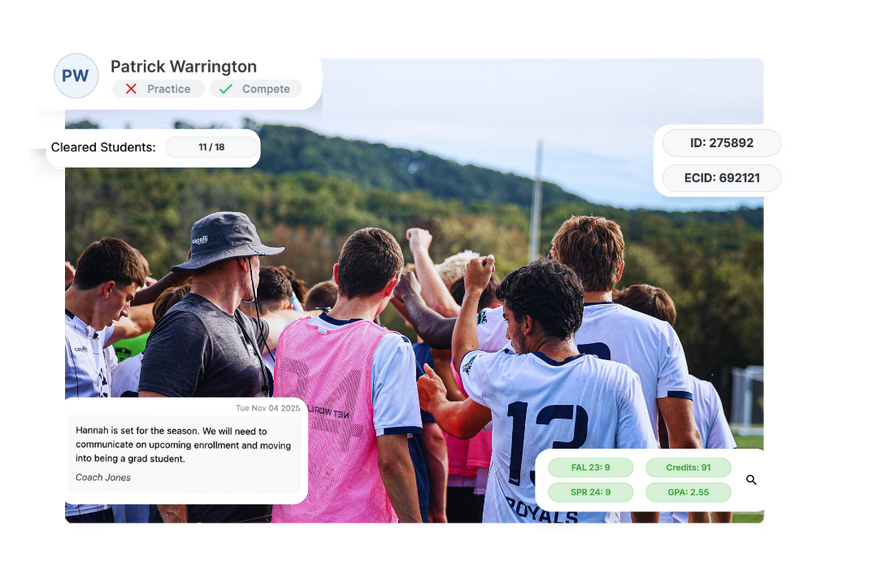
CoPilot surfaces coach-relevant context fast, from social media to game film, and creates recruit profiles automatically so you can evaluate, save, and follow up without rebuilding history across tabs.

Explore The Features  ⟶
Automated Texting From Your Number

With WinWon, Text Student-Athletes at Scale - Personally

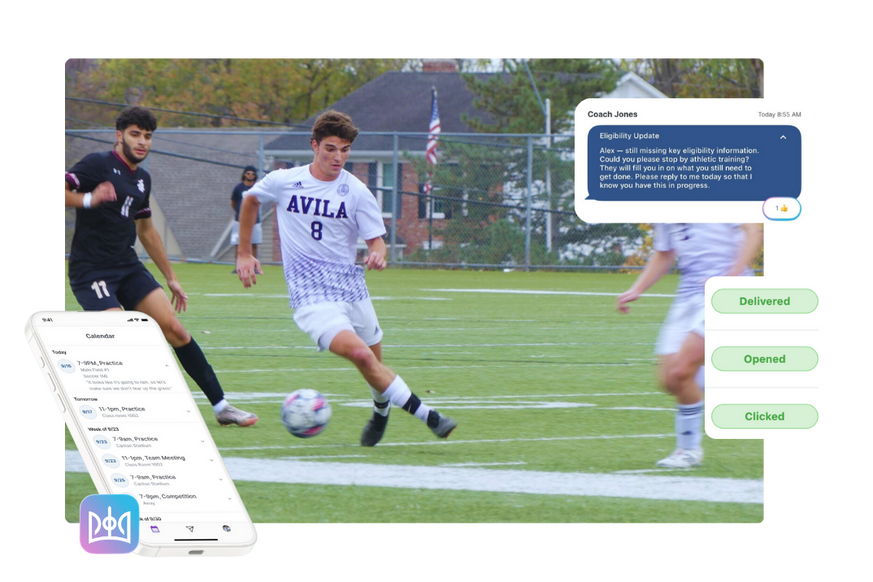
Give student-athletes a single app for eligibility, schedules, announcements, and every key connection across the department. WinWon ties it all together—so communication, compliance, and coordination never fall out of sync.

Explore The Features  ⟶
Shared Recruiting Boards for Your Entire Staff Athlete Recruiting

Track Every Touch Point with WinWon Intelligence

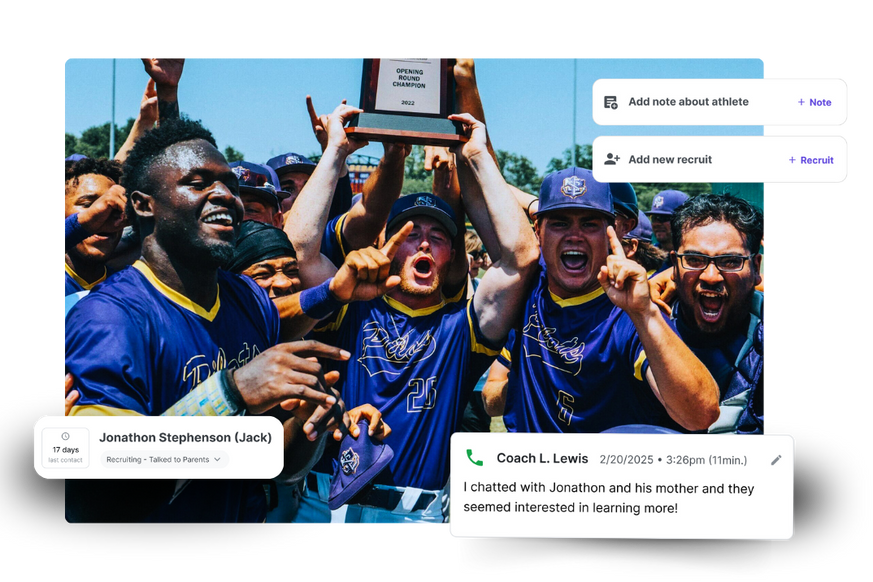
Keep your recruiting board, notes, and communication history connected, so your staff always knows who's been contacted, what was said, and what's next. No more rebuilding context from texts, inbox searches, and scattered spreadsheets.

Explore The Features  ⟶
Capture Student-Athlete Prospects Instantly

Turn Interest Into a Profile. Instantly

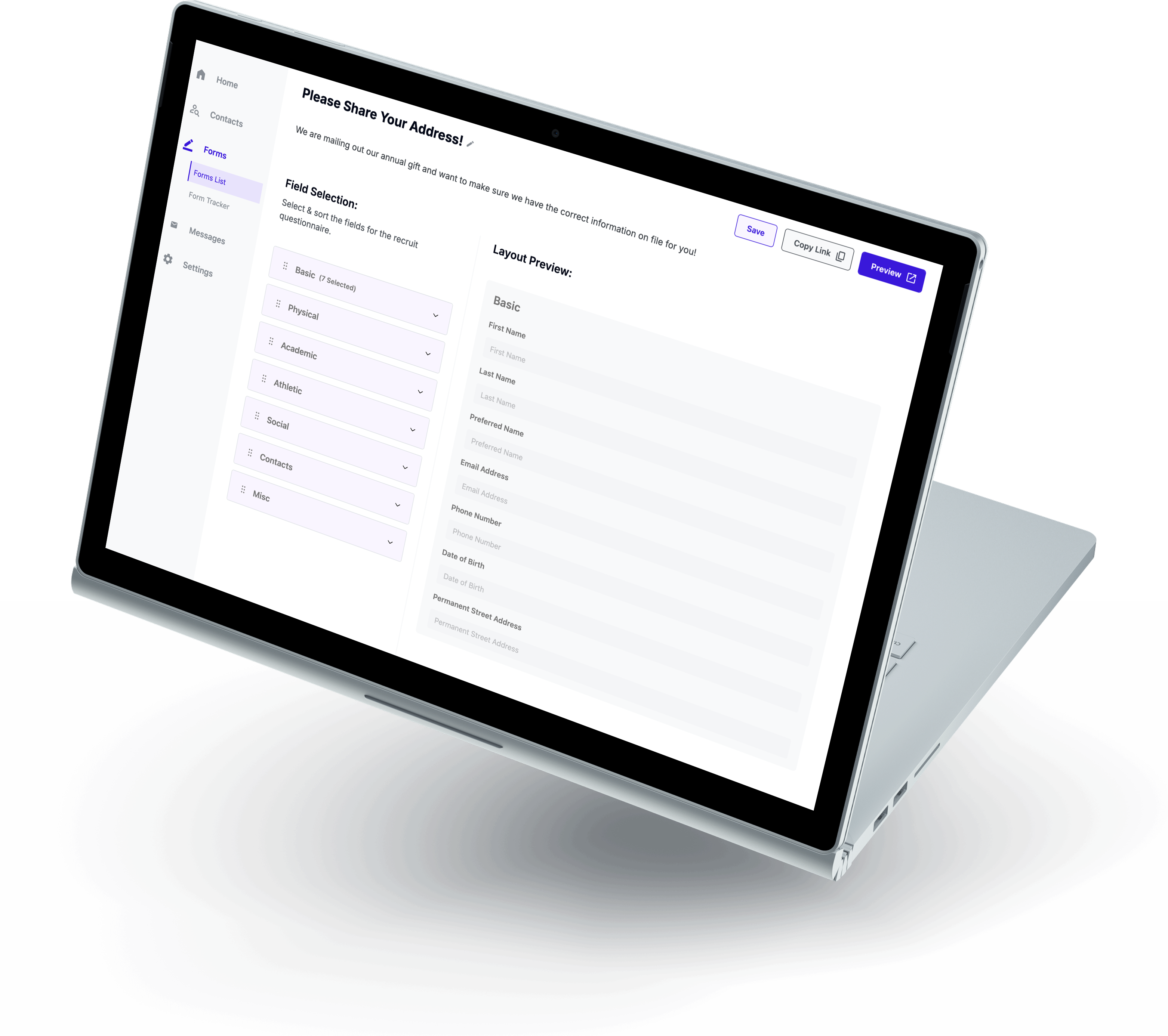
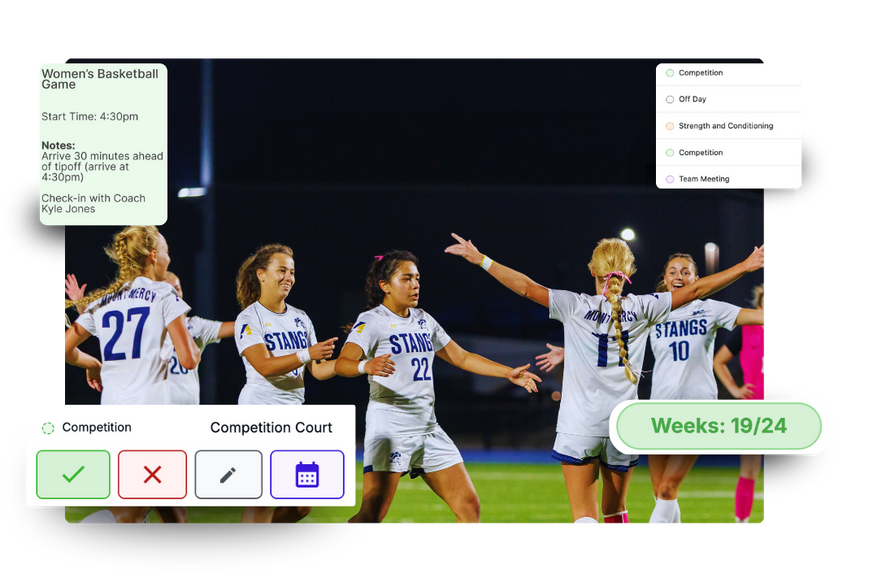
WinWon makes it easy to capture prospects the moment you meet them. Met a prospect at camp, on a visit, after a referral, or mid-conversation? Use QR codes and smart questionnaires to collect details instantly, and CoPilot turns that intake into a clean recruit profile without admin work.

Explore The Features  ⟶
AI-Powered Recruiting Follow-Up

Close Faster with AI Powered Next Steps Built In

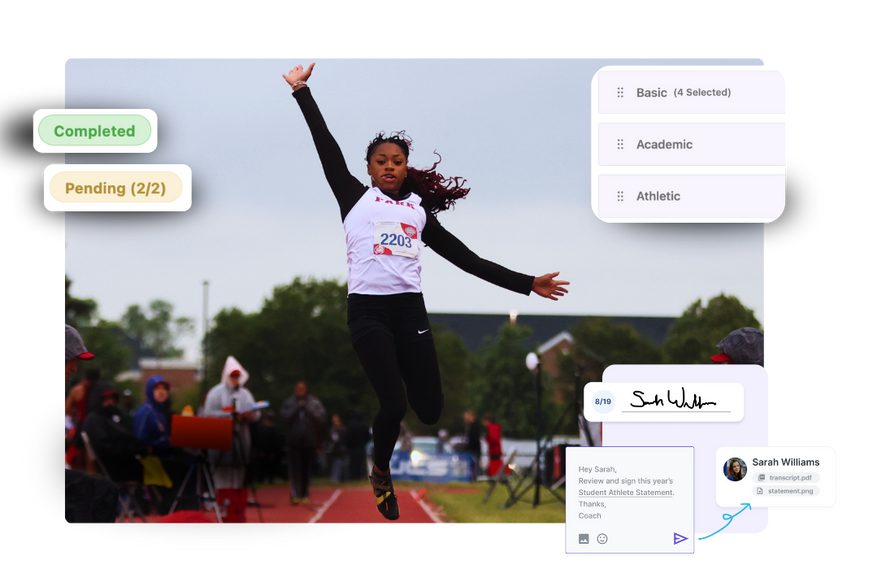
WinWon keeps recruiting moving by tying evaluations, notes, and next steps directly to each recruit, so coaches don't rely on memory to manage momentum. You get a clearer process for identifying who's real, who's pending, and exactly what needs to happen next.

Explore The Features  ⟶

Common Questions

See below for frequently asked questions and their answers.

What is the modern college football recruiting timeline?
The modern college football recruiting timeline has accelerated significantly. Many top prospects now commit during their junior year, and the December early signing period has become the primary decision window. In addition, transfer portal windows in spring and fall create compressed recruiting cycles where coaches must evaluate and contact prospects within days—not months. Successful programs operate year-round recruiting systems rather than seasonal efforts.
How has the transfer portal changed college football recruiting?
The transfer portal has created a parallel recruiting cycle that moves much faster than traditional high school recruiting. Coaches must pre-identify roster needs, evaluate film quickly, and reach out within hours of a player entering the portal. Portal recruiting requires speed, organization, and a clear pitch, as many transfers make decisions within a week of entering.
How should coaches evaluate high school football recruits beyond star ratings?
Star ratings can provide context, but they should never replace scheme fit and character evaluation. Coaches should assess athletic ability, positional fit, coachability, academic readiness, and cultural alignment. Gathering insight from high school coaches, reviewing transcripts early, attending camps, and having direct conversations with prospects and families all help determine long-term development potential.
What is the best way to organize a college football recruiting pipeline?
The most effective recruiting pipelines use centralized systems that track every prospect interaction—texts, calls, visits, evaluations, and next steps—in one shared platform. This prevents duplicate outreach, improves staff alignment, and ensures no recruits fall through the cracks, especially during staff turnover or busy seasons.
How can coaches personalize communication at scale?
Structured communication systems allow coaches to send personalized messages that reference specific game performances, position skills, or previous conversations. Personalized texting from a coach’s actual number significantly improves response rates. The key is maintaining consistent, relevant outreach without sending generic mass messages that recruits ignore.
What role does technology play in modern college football recruiting?
Recruiting technology streamlines research, contact tracking, follow-ups, and evaluation workflows. AI-powered tools can compile prospect profiles, pull stats and film, and surface relevant context in seconds. When administrative tasks are automated, coaches can focus more time on relationship-building and closing commitments.
How should programs measure recruiting success beyond rankings?
Recruiting rankings are only one indicator of success. Smart programs track retention rates, on-field production, academic performance, and hit rates on top targets. They also analyze process metrics like response rates, conversion from camp to offer, and time-to-close. Data-informed recruiting systems help coaches refine strategy and allocate time more effectively.

Read More Customer Stories

From conference-wide efficiency to on-campus transformation, discover how athletic departments across the nation are winning with WinWon.

Messaging

Real-time communication built
for athletics.

Read More  ⟶

Student Worker Schedules

Simplify every shift and keep coverage
clear.

Read More  ⟶

Full Mobile Suite

Manage your team anytime,
anywhere.

Read More  ⟶

Athlete Management

One source of truth for every
roster.

Read More  ⟶

Athlete Recruiting

Find talent, build relationships,
win more.

Read More  ⟶

Scheduling & Facility
Management

One calendar to replace them all.

Read More  ⟶

How Our Lady of the Lake University Transformed Academic Eligibility—and Cut Processing Time by 75% with WinWon

How Our Lady of the Lake University Transformed Academic Eligibility—and Cut Processing Time by 75% with WinWon

Read More

How LSUS Baseball Built Structure, Speed, and Recruiting Clarity with WinWon

How LSUS Baseball Built Structure, Speed, and Recruiting Clarity with WinWon

Read More

How Mahaska Community Recreation Foundation Unified Youth Sports Scheduling with WinWon

How Mahaska Community Recreation Foundation Unified Youth Sports Scheduling with WinWon

Read More

How Johnson University Built a Smarter Scholarship System—Designed Their Way—with WinWon

Building community across programs was a challenge. Learn how WinWon unified communication and brought every team together.

Read More
One Department, One Conversation — Powered by WinWon

From chaos to connection—Avila Athletics unified five channels with WinWon to power faster, smarter team communication.

Read More
How William Penn University Built Campus-Wide Community Through WinWon

Building community across programs was a challenge. Learn how WinWon unified communication and brought every team together.

Read More
How Centenary College Gymnastics Elevated Recruiting with WinWon

Recruiting consistency mattered as their team grew. Learn how WinWon helped personalize outreach and track every interaction.

Read More

How Faulkner University Transformed The Athlete Onboarding Experience with WinWon

Document management and onboarding were slowing staff down. See how WinWon’s mobile AMS streamlined forms and athlete setup.

Read More

One Portal, Every Signature: The Frontier Conference’s New Era of Efficiency

Managing multi-school approvals was complex. Learn how WinWon’s conference portal streamlined every signature and submission.

Read More