Built for NAIA Athletic Operations

NCAA DII Compliance & Eligibility: A Straightforward Guide for Athletic Departments

NCAA Division II runs on its own rulebook. DII has its own eligibility standards, its own academic-progress math, and its own transfer rules.

This guide breaks down what actually governs DII eligibility, points out where the real administrative work lives, and discusses how to optimize your department for success.
What This Article Covers: 
Core NCAA DII Eligibility & Compliance Rules
Eligibility applies to all athletes and includes multiple academic and participation requirements.
Initial and Continuing Eligibility
The standards to begin an NCAA DII career and to continue over the years.
An Educational Overview
This is an educational overview, current as of mid-2026. NCAA legislation changes often — always confirm specifics against the current NCAA Division II Manual and your compliance office before making an eligibility decision.

Want to Learn More About WinWon?

Meet With WinWon

Initial eligibility: getting through the front door

Before a DII athlete can practice, compete, or receive athletics aid in their first year of full-time enrollment, they have to clear the NCAA Eligibility Center.

For Division II, the academic bar is:

Graduate high school and complete 16 NCAA-approved core courses (English, math, natural/physical science, social science, and additional academic courses).

Earn at least a 2.2 core-course GPA — the "full qualifier" line, which clears the athlete to practice, compete, and receive aid as a freshman.

Amateurism certification through the Eligibility Center.Two things trip departments up.

First, standardized test scores are no longer required for DII initial eligibility — the old test-score sliding scale is gone, so certification now rests on core courses and core GPA. Second, DII has a partial qualifier status: an athlete who lands between 2.0 and 2.199 can receive aid and practice, but can't compete in year one. Knowing which bucket an incoming athlete falls into — full qualifier, partial qualifier, or nonqualifier — before they arrive on campus is what prevents an ugly surprise in week one.

To stay eligible, a DII athlete has to keep making academic progress every term:

  • Full-time enrollment. Athletes generally must be enrolled full-time (12+ semester hours) to practice or compete. Dropping below full-time — even briefly — can end eligibility for the term.
  • The 9-hour rule. An athlete must pass at least 9 semester hours in their current full-time term to be eligible to compete the next term.
  • The 24-hour rule. Athletes must earn 24 degree-applicable semester hours each academic year, with at least 18 earned between the start of fall classes and spring commencement (up to 6 can come from summer).
  • Designating a degree. By the start of the third year (fifth semester), the athlete must have declared a specific degree program — and from that point, the credits that count toward eligibility have to count toward that degree.
  • GPA progression tied to the school's graduation requirement.Worth flagging for anyone who came up through the DI world: DII does not use the 40-60-80 "percentage-of-degree" rule. DII runs on the 24-hour / 9-hour / 10-semester framework instead, and mixing the two up is a common, costly error.

Staying eligible: continuing eligibility and progress toward degree

To stay eligible, a DII athlete has to keep making academic progress every term:

  • Full-time enrollment. Athletes generally must be enrolled full-time (12+ semester hours) to practice or compete. Dropping below full-time — even briefly — can end eligibility for the term.
  • The 9-hour rule. An athlete must pass at least 9 semester hours in their current full-time term to be eligible to compete the next term.
  • The 24-hour rule. Athletes must earn 24 degree-applicable semester hours each academic year, with at least 18 earned between the start of fall classes and spring commencement (up to 6 can come from summer).
  • Designating a degree. By the start of the third year (fifth semester), the athlete must have declared a specific degree program — and from that point, the credits that count toward eligibility have to count toward that degree.
  • GPA progression tied to the school's graduation requirement.Worth flagging for anyone who came up through the DI world: DII does not use the 40-60-80 "percentage-of-degree" rule. DII runs on the 24-hour / 9-hour / 10-semester framework instead, and mixing the two up is a common, costly error.

Transfers: the rules that keep moving

If any part of DII compliance is a moving target right now, it's transfers: Immediate eligibility is now the norm for academically eligible athletes in good standing. Restrictions on transferring multiple times have largely been removed — an athlete who meets the academic standard and enters the portal during their sport's window can generally compete right away.
DII eliminated its old transfer exceptions, and the previous June 15 written-notification requirement is no longer part of the standard transfer analysis.
New academic standards apply to four-year transfers, with recent proposals tightening how the term-by-term hour requirement must be met.

To stay eligible, a DII athlete has to keep making academic progress every term:

  • Full-time enrollment. Athletes generally must be enrolled full-time (12+ semester hours) to practice or compete. Dropping below full-time — even briefly — can end eligibility for the term.
  • The 9-hour rule. An athlete must pass at least 9 semester hours in their current full-time term to be eligible to compete the next term.
  • DII eliminated its old transfer exceptions, and the previous June 15 written-notification requirement is no longer part of the standard transfer analysis.
  • New academic standards apply to four-year transfers, with recent proposals tightening how the term-by-term hour requirement must be met.
  • Portal windows are sport-specific, and missing a window can freeze an athlete's ability to move until the next one opens.The practical takeaway: transfer eligibility now depends heavily on getting academic records, notifications, and paperwork right and on time — and the rules are revised year to year, so last season's process may not be this season's.

A quick word on CARA

Countable athletically related activities (CARA) — practices, competitions, required lifts, film — carry their own daily and weekly limits and documentation requirements under DII rules. The topic is broad, so for more information, visit our fulsome DII CARA guide .

Where the administrative work actually lives

WinWon is purpose-built for all collegiate athletic departments. See how the DII platform works →.

This guide is educational and does not constitute compliance advice. Confirm all current standards with the NCAA Division II Manual and your institution's compliance office.

NAIA Rules, Explained and Operationalized

These guides break down the most common NAIA compliance rules and how schools actually track them day to day. Each article focuses on practical workflows, common mistakes, and how to maintain consistent visibility across staff.
Compliance Hub

Read More

NAIA Compliance Hub
A centralized starting point for NAIA compliance resources, rule explainers, and operational best practices.

24-Week Rule

Read More ⟶

How to Track the NAIA 24-Week Rule.
Practical guidance on monitoring participation weeks, avoiding miscounts when schedules change, and keeping coaches and compliance aligned.

Off-Day Policy

Read More ⟶

How to Track Your NAIA Off-Day Policy.
Step-by-step guidance for enforcing required off days, managing exceptions, and maintaining consistent tracking across teams and seasons.

One Platform for Eligibility Visibility

Eligibility works best when information is connected.

WinWon brings participation tracking, academic data, documents, and communication into a single system used across the athletic department. Staff see the same information at the same time, reducing manual work and uncertainty.

“It’s not just faster—it’s cleaner. I can see everything from one dashboard, and I know the data is right. That gives us peace of mind.”

Brandon Perry, Athletic Director, Johnson University

How Does WinWon Support NAIA Athletic Departments?

Finally, One Source of Truth for Everyone in Your Athletic Department
NAIA Eligibility

The Future of Academic Automation

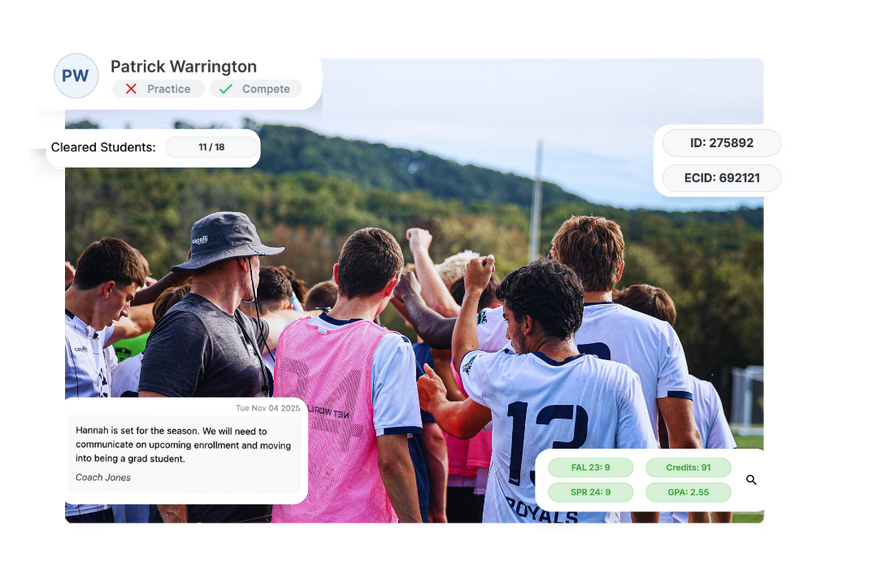
Automated academic tracking that’s more accurate, less painful, and easier to keep current across teams. Coaches and compliance staff see the same status without chasing transcripts one by one.

Explore The Features  ⟶The OLLU Case Study ⟶
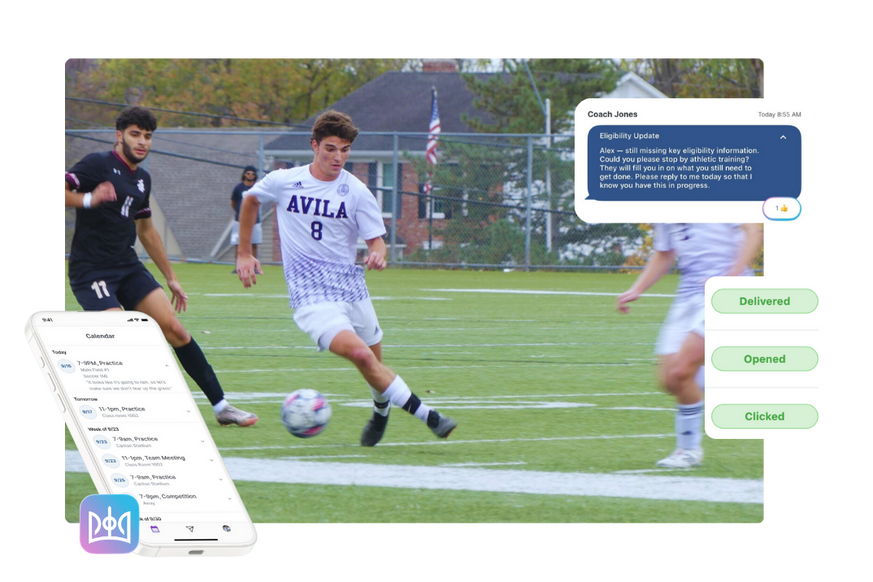
NAIA Student Athlete Communications

Every Athlete, One Source of Truth

Give student-athletes a single app for eligibility, schedules, announcements, and every key connection across the department. WinWon ties it all together—so communication, compliance, and coordination never fall out of sync.

Explore The Features  ⟶The Avila Case Study ⟶
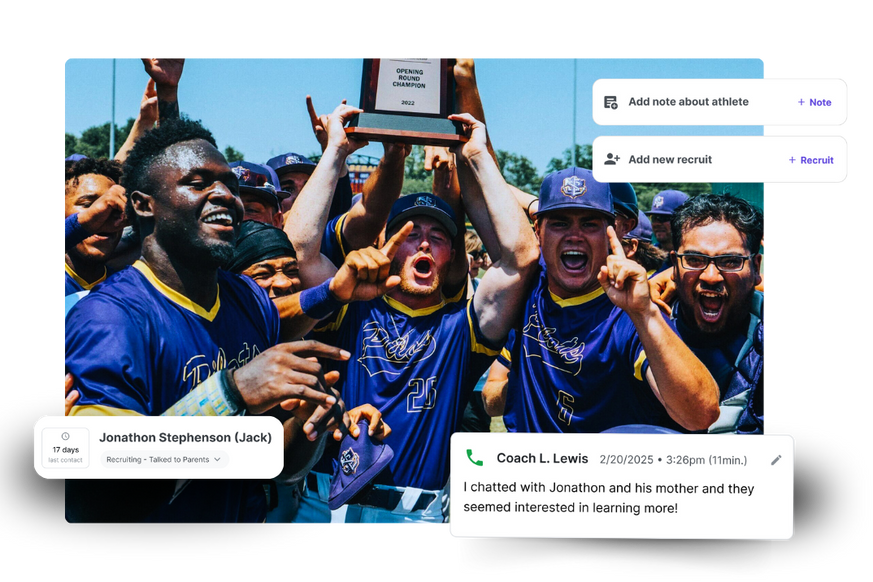
NAIA Athlete Recruiting

Recruit Smarter, Not Harder

Replace spreadsheets and guesswork with intelligent search, automated outreach, and real-time insights. WinWon connects every text, email, and evaluation to your recruiting board automatically—turning conversations into commitments faster.

Explore The Features  ⟶The LSUS Case Study ⟶
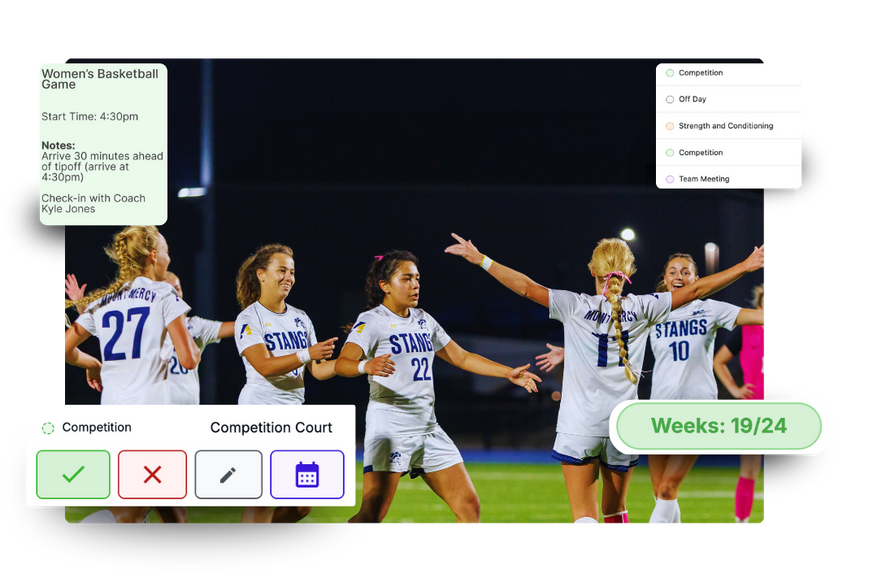
NAIA Calendar and Time-Tracking

Where Schedules Become Compliance

If your department is juggling Outlook, GCal, and spreadsheets just to manage off-day rules, you’re not alone. WinWon replaces that chaos with one centralized calendar that syncs instantly and turns every event into a compliance record—so tracking stays accurate when schedules change.

Explore The Features  ⟶The Mount Mercy Case Study ⟶
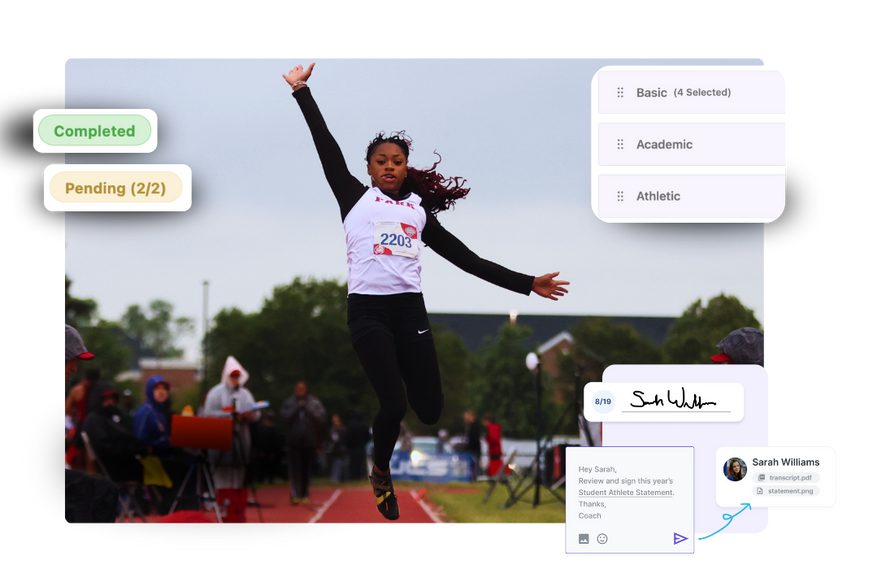
Questionnaires & E-Sign Documents

Paperwork That Files Itself

E-sign documents and smart questionnaires automatically attach to athlete profiles the moment they’re submitted. WinWon builds your audit trail for you—no chasing attachments, no duplicate uploads, just time saved and accuracy gained.

Explore The Features  ⟶The Faulkner Case Study ⟶

Common Questions

See below for frequently asked questions and their answers.

What are the basic NAIA eligibility requirements for incoming students?
To be eligible to compete at an NAIA school, students must meet NAIA eligibility requirements tied to academics and enrollment status. This typically includes completing high school graduation, submitting student transcripts, and registering with the NAIA Eligibility Center through a PlayNAIA profile.

Eligibility is determined before a student can practice, play, or compete at an NAIA institution.
How does high school graduation factor into NAIA eligibility?
High school graduation is required for eligibility at an NAIA college or university. The NAIA evaluates a student’s academic record based on coursework completed during high school, final transcripts, and graduation status.For high school student athletes, graduating on time and submitting complete transcripts helps avoid delays during the eligibility process.
What GPA is required to be eligible in the NAIA?
The NAIA uses a 4.0 scale when evaluating academic eligibility. In many cases, students must earn a high school GPA that meets minimum standards, often referenced as a 2.0 on a 4.0 scale or higher, depending on the pathway used.A GPA of 2.0 may allow a student to qualify, but eligibility is determined using multiple criteria, not GPA alone.
What are the three straightforward academic criteria used by the NAIA?
The NAIA outlines three straightforward academic criteria that determine initial eligibility. These include GPA, standardized test scores, and class rank or completion benchmarks. Meeting the three following criteria can mean a student instantly qualifies for eligibility, depending on their academic record and graduation status.
How do ACT or SAT scores impact eligibility?
ACT and SAT scores may be used as part of eligibility determination. This includes the ACT, SAT score, and specific components such as math combined and critical reading. A qualifying graduating class ACT score can help offset other academic factors. Test scores are evaluated alongside GPA and class rank using NAIA criteria.
Does class rank matter for NAIA eligibility?
Yes. Class rank can be used as part of the eligibility evaluation. Students who graduate in the top half of their high school class may qualify under certain eligibility pathways. Class rank is reviewed in combination with GPA and test scores, not in isolation.
How does eligibility work for international student athletes?
International student athletes and international students follow the same eligibility principles but may have additional documentation requirements. This often includes transcript evaluation, proof of graduation, and enrollment verification.International students attending a U.S. college or university should plan ahead, as eligibility review can take longer depending on documentation and translation needs.

Read More Customer Stories

From conference-wide efficiency to on-campus transformation, discover how athletic departments across the nation are winning with WinWon.

Messaging

Real-time communication built
for athletics.

Read More  ⟶

Student Worker Schedules

Simplify every shift and keep coverage
clear.

Read More  ⟶

Full Mobile Suite

Manage your team anytime,
anywhere.

Read More  ⟶

Athlete Management

One source of truth for every
roster.

Read More  ⟶

Athlete Recruiting

Find talent, build relationships,
win more.

Read More  ⟶

Scheduling & Facility
Management

One calendar to replace them all.

Read More  ⟶

Avila University's Secret to Seamless Athletic Recruiting

Avila University's Secret to Seamless Athletic Recruiting

Read More

How Our Lady of the Lake University Transformed Academic Eligibility—and Cut Processing Time by 75% with WinWon

How Our Lady of the Lake University Transformed Academic Eligibility—and Cut Processing Time by 75% with WinWon

Read More

How LSUS Baseball Built Structure, Speed, and Recruiting Clarity with WinWon

How LSUS Baseball Built Structure, Speed, and Recruiting Clarity with WinWon

Read More

How Mahaska Community Recreation Foundation Unified Youth Sports Scheduling with WinWon

How Mahaska Community Recreation Foundation Unified Youth Sports Scheduling with WinWon

Read More

How Johnson University Built a Smarter Scholarship System—Designed Their Way—with WinWon

Building community across programs was a challenge. Learn how WinWon unified communication and brought every team together.

Read More
One Department, One Conversation — Powered by WinWon

From chaos to connection—Avila Athletics unified five channels with WinWon to power faster, smarter team communication.

Read More
How William Penn University Built Campus-Wide Community Through WinWon

Building community across programs was a challenge. Learn how WinWon unified communication and brought every team together.

Read More
How Centenary College Gymnastics Elevated Recruiting with WinWon

Recruiting consistency mattered as their team grew. Learn how WinWon helped personalize outreach and track every interaction.

Read More

How Faulkner University Transformed The Athlete Onboarding Experience with WinWon

Document management and onboarding were slowing staff down. See how WinWon’s mobile AMS streamlined forms and athlete setup.

Read More