WinWon Intelligience

The Modern Coach's Guide to Student-Athlete Recruiting

Recruiting has changed. What used to mean summer camps and phone trees now involves transfer portals, social media scouting, and competition windows that close in days, not months.

The challenge isn't finding talent. It's managing hundreds of prospects across multiple classes while keeping every conversation personal, every evaluation updated, and every assistant on the same page.

This guide breaks down how modern college coaches are building recruiting systems that scale: identifying fits faster, communicating authentically at volume, and managing pipelines that don't fall apart during transfer portal chaos.
What This Article Covers: 
Understanding the Modern Recruiting Landscape
The transfer portal, NIL, and early commitments have fundamentally changed how coaches identify and secure student-athletes.
Building Your Recruiting Foundation
Create detailed position profiles, project your roster three years out, and develop a geographic recruiting strategy that maximizes efficiency.
Prospect Identification and Evaluation
Build systematic sourcing processes across camps, social media, and coaching networks. Plus frameworks for evaluating both athletic ability and character.
Communication Strategy and Relationship Building
Learn how to personalize outreach at scale, manage communication frequency across your pipeline, and build authentic relationships with prospects and parents.
The Campus Visit Experience
Design official visits that convert interest into commitments through strategic planning, host athlete selection, and proper follow-up.
Managing Your Recruiting Pipeline
Track hundreds of prospects efficiently with tiered recruiting lists, stage categorization, and systems that prevent talented recruits from falling through the cracks.

Want to Learn More About WinWon?

Meet With WinWon

Understanding the Modern Recruiting Landscape

Recruiting has evolved dramatically over the past decade. What once relied primarily on in-person camps and word-of-mouth referrals has transformed into a sophisticated, multi-channel operation requiring strategic planning, consistent communication, and data-driven decision-making. 

The coaches who excel in today's recruiting landscape understand that great recruiting is about building relationships, managing complex timelines, and creating systems that scale.

The transfer portal, NIL agreements, and early commitments have fundamentally changed how coaches identify, evaluate, and secure commitments from student-athletes. You're no longer just competing for high school seniors, you're evaluating college athletes looking for better opportunities.

NIL has added another dimension to prospect conversations, and early commitments continue trending younger.Your timeline for identifying and engaging with potential recruits needs to start earlier than ever before, and the process may be faster than a week with certain transfers.

Building Your Recruiting Foundation

Successful recruiting starts with clarity about who you're looking for. Create a detailed profile for each position that includes minimum athletic benchmarks, academic requirements, and behavioral characteristics.

1. Don't just focus on current needs, project your roster three years out. Which positions will lose multiple starters? Where are you thin on depth? This forward-looking analysis prevents recruiting for immediate needs at the expense of long-term program building.

2. Geographic strategy matters more than many realize. Start by identifying your primary recruiting zone - typically within 3-4 hours of campus - where you'll have natural advantages through easier unofficial visits, existing high school coach relationships, and alumni networks.

Build your core roster from this area, then expand strategically to secondary zones for difference-makers who justify the additional investment.

Prospect Identification and Evaluation

Great recruiting starts with great sourcing:

High school and club coaches remain your most valuable source, these relationships take time to develop but pay dividends for years. 

Recruiting camps provide concentrated evaluation opportunities, but focus on events that attract your target demographic. 

Social media has become essential for discovery, with recruits constantly posting highlights. Follow relevant hashtags and set up alerts for prospects in your target areas. Often, great coaches DM for contact information and then continue the dialogue over phone calls and messaging. 

Develop a consistent evaluation framework. Many successful programs use a 1-5 scale across athletic ability, academics, character, and positional fit. Track prospects across multiple viewings, not just single performances. Involve multiple staff members in evaluation to get diverse perspectives and prevent costly mistakes

.Character evaluation is more difficult but arguably more important for long-term program success. Ask high school coaches specific behavioral questions: "Tell me about a time this athlete faced significant adversity, how did they respond?"

Social media provides unfiltered insight into how prospects present themselves publicly. Campus visits remain the gold standard. Pay attention to how prospects treat staff members, interact with current athletes, and engage with academic advisors.

Communication Strategy and Relationship Building

Generic recruiting messages are worse than no communication. The messages that break through are personal and specific (and ideally from your own phone number): reference particular performances, connect their goals to your program, and share relevant team news that shows you're paying attention.

Communication frequency depends on where prospects are in your recruiting funnel. Early-stage prospects need monthly touchpoints. Mid-stage prospects benefit from bi-weekly contact with deeper conversations about your system and culture. Late-stage prospects require weekly or even daily contact during critical decision windows.

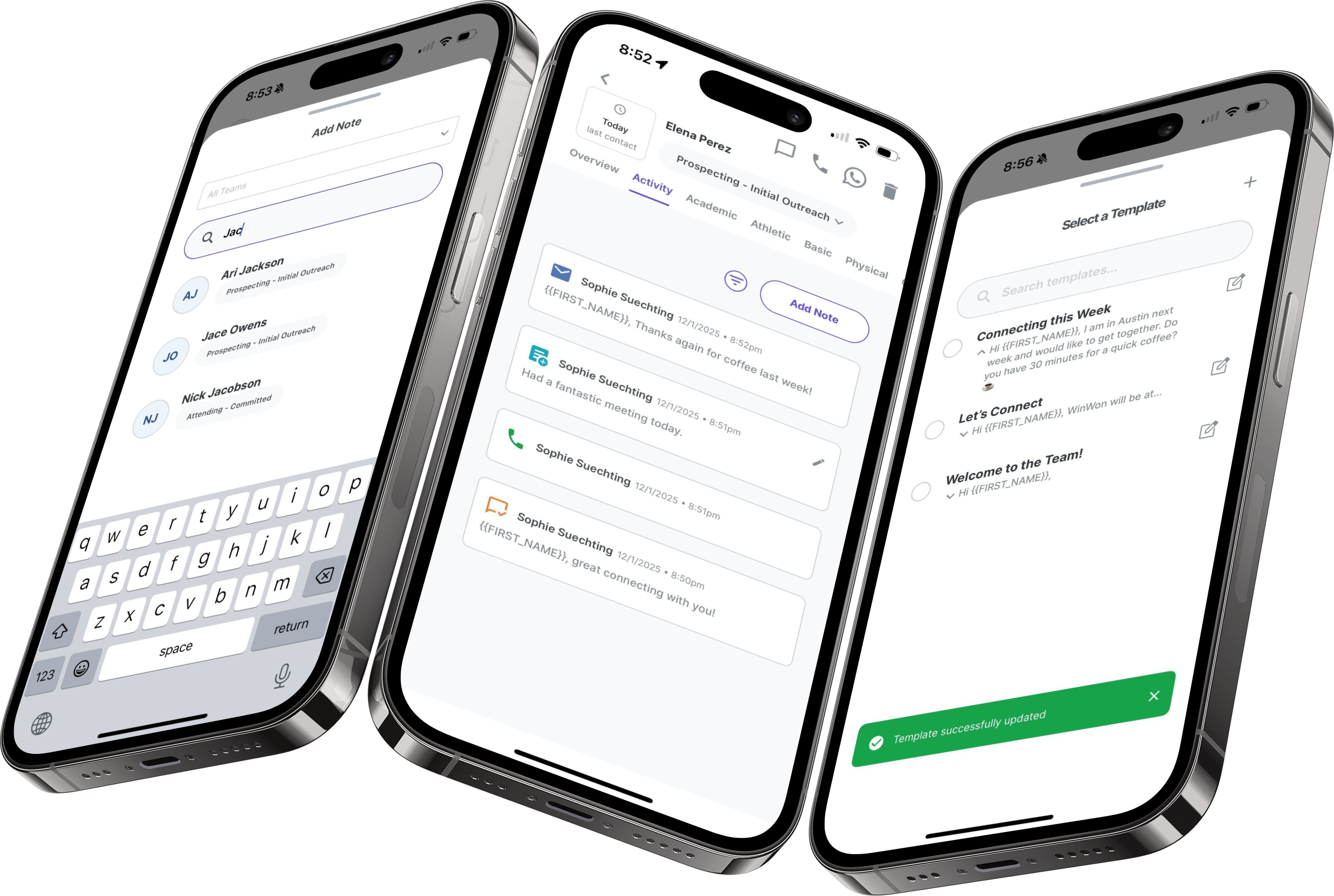
Recruiting Tip: Platforms like WinWon enable coaches to send personalized messages at scale from their own phone numbers, maintaining authentic relationships while managing hundreds of prospects efficiently. The ability to automate personalization saves hours while maintaining quality communication.

Different recruits prefer different channels. Text messages work for quick updates, phone calls build deeper relationships, email handles detailed information, and social media keeps your program visible in daily feeds. Pay attention to where each recruit is most responsive.

Don't undervalue relationships with parents, they significantly influence final decisions. Contact parents early, address their concerns about academic support and player safety directly, and share how you've helped other athletes succeed beyond athletics. This positions you as invested in their child's future, not just their athletic contributions.

The Campus Visit Experience

The official visit represents your best opportunity to convert interest into commitment. Create detailed itineraries that balance structure with flexibility. Assign host athletes strategically, match prospects with current athletes who share similar backgrounds or academic interests.

First impressions matter. Meet recruits promptly with multiple staff members. Facility tours should emphasize functionality. Explain your training philosophy, walk through sports medicine protocols, and discuss your film review process. Academic meetings separate good recruiting from great recruiting. Don't rush this component.

Follow up within 24 hours with personalized messages referencing specific moments from their visit. Send photos and videos to keep the experience fresh. Address any questions or concerns proactively, and continue regular communication adjusted to their decision timeline.

Managing Your Recruiting Pipeline

You cannot manage what you don't measure. Build a comprehensive database capturing contact details, academic credentials, athletic measurables, evaluation notes, communication history, and recruitment status. Categorize prospects by stage: identified, engaged, interested, committed, or signed.

Recruiting Efficiency Tip: Managing hundreds of prospects manually becomes unmanageable quickly. Modern platforms like WinWon's recruiting depth chart allow coaches to visualize their entire pipeline by position, identify needs, and automatically generate recruiting lists based on priorities transforming recruiting from reactive chaos to strategic execution.

Many successful coaches maintain ratios of prospects to roster spots. The sweet spot involves tiered recruiting: 1-2 dream prospects, 3-5 primary targets, and 5-8 secondary options. This provides security while allowing genuine relationship building with your most important targets.

Compliance and Ethical Standards

Modern recruiting demands strategic systems, authentic relationships, and unwavering ethical standards. Compliance violations can devastate programs. Thoroughly understand contact periods, dead periods, evaluation periods, and quiet periods, these vary by sport and division. Mark these clearly on your calendar and brief all staff regularly.

Beyond NCAA rules, maintain personal ethical standards. Never mislead recruits about playing time or development expectations. Don't negatively recruit by criticizing other programs. Finally, respect decisions after prospects commit elsewhere, many transfer or have younger siblings who'll remember how you treated them.

The coaches who excel understand that recruiting success is all about working smarter, building genuine connections, and creating scalable processes that allow them to compete for top talent while maintaining their integrity and sanity. Invest in the right systems, focus on relationships over transactions, and your recruiting results will follow.

AI Student-Athlete Recruiting That Turns Conversations Into Commitments

Learn how college coaches are using AI in student-athlete recruiting workflows, without losing the personal touch. These guides cover practical playbooks for transfer portal recruiting, keeping your staff aligned, and turning prospect conversations into commitments when recruiting moves fast.
AI Student Athlete Recruiting Hub

Read More

College Athlete Recruiting Hub
A centralized starting point for student-athlete recruiting. Learn how college coaches are using AI in student-athlete recruiting workflows, without losing the personal touch.

24-Week Rule

Read More ⟶

How to Track the NAIA 24-Week Rule.
Practical guidance on monitoring participation weeks, avoiding miscounts when schedules change, and keeping coaches and compliance aligned.

Off-Day Policy

Read More ⟶

How to Track Your NAIA Off-Day Policy.
Step-by-step guidance for enforcing required off days, managing exceptions, and maintaining consistent tracking across teams and seasons.

Recruiting CoPilot: Built for the Transfer Era

In modern college recruiting, speed and follow-through win, but most staffs are still operating across tabs, texts, and spreadsheets.

CoPilot brings recruiting into one system so your staff moves faster without losing the human side of the relationship.

“It’s not just organization—it’s peace of mind. We’re structured, but still flexible enough to recruit creatively and build relationships the right way.”

Brad Neffendorf, Head Baseball Coach, Louisiana State University Shreveport (LSUS)

How WinWon Supports Modern College Sports Recruiting

Finally, One Recruiting Source of Truth for Your Staff
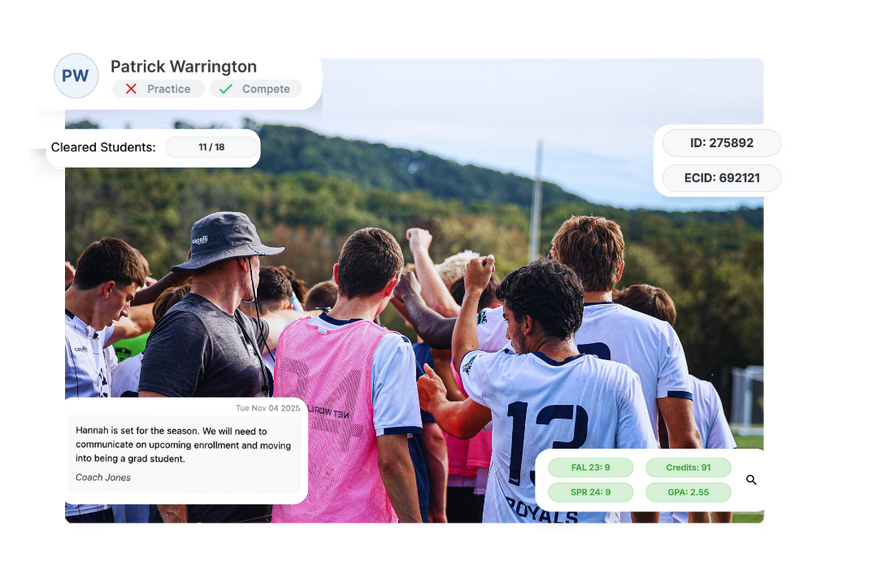
AI Recruiting Search Built for Coaches

The Future of Academic Automation

CoPilot surfaces coach-relevant context fast, from social media to game film, and creates recruit profiles automatically so you can evaluate, save, and follow up without rebuilding history across tabs.

Explore The Features  ⟶
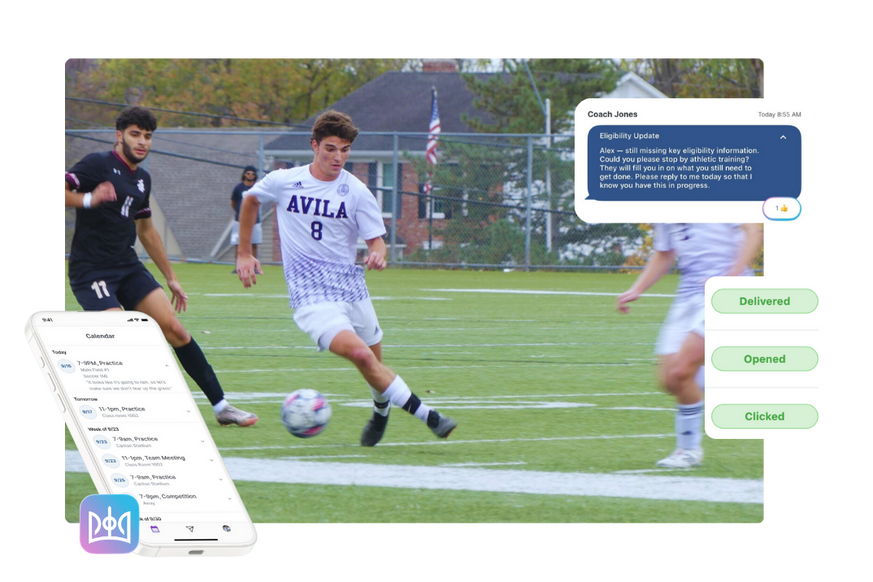
Automated Texting From Your Number

With WinWon, Text Student-Athletes at Scale - Personally

Give student-athletes a single app for eligibility, schedules, announcements, and every key connection across the department. WinWon ties it all together—so communication, compliance, and coordination never fall out of sync.

Explore The Features  ⟶
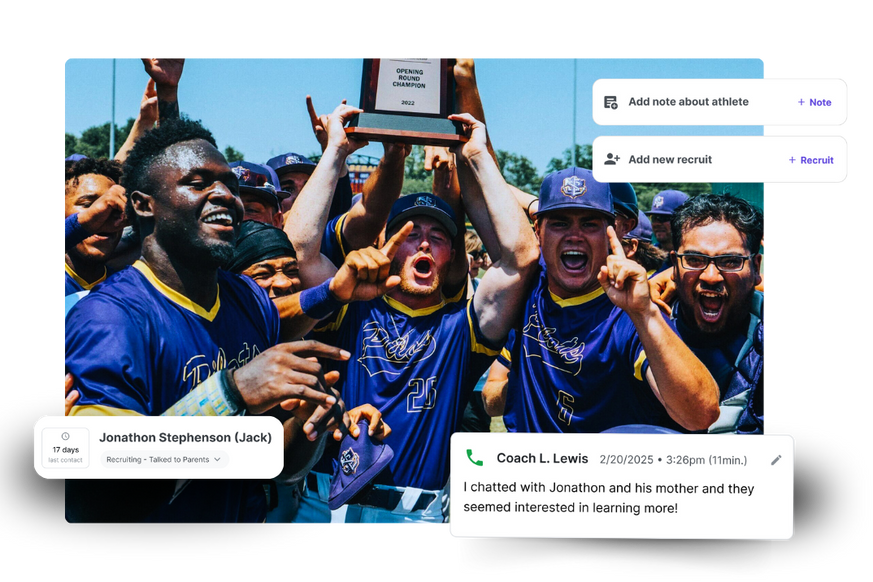
Shared Recruiting Boards for Your Entire Staff Athlete Recruiting

Track Every Touch Point with WinWon Intelligence

Keep your recruiting board, notes, and communication history connected, so your staff always knows who's been contacted, what was said, and what's next. No more rebuilding context from texts, inbox searches, and scattered spreadsheets.

Explore The Features  ⟶
Capture Student-Athlete Prospects Instantly

Turn Interest Into a Profile. Instantly

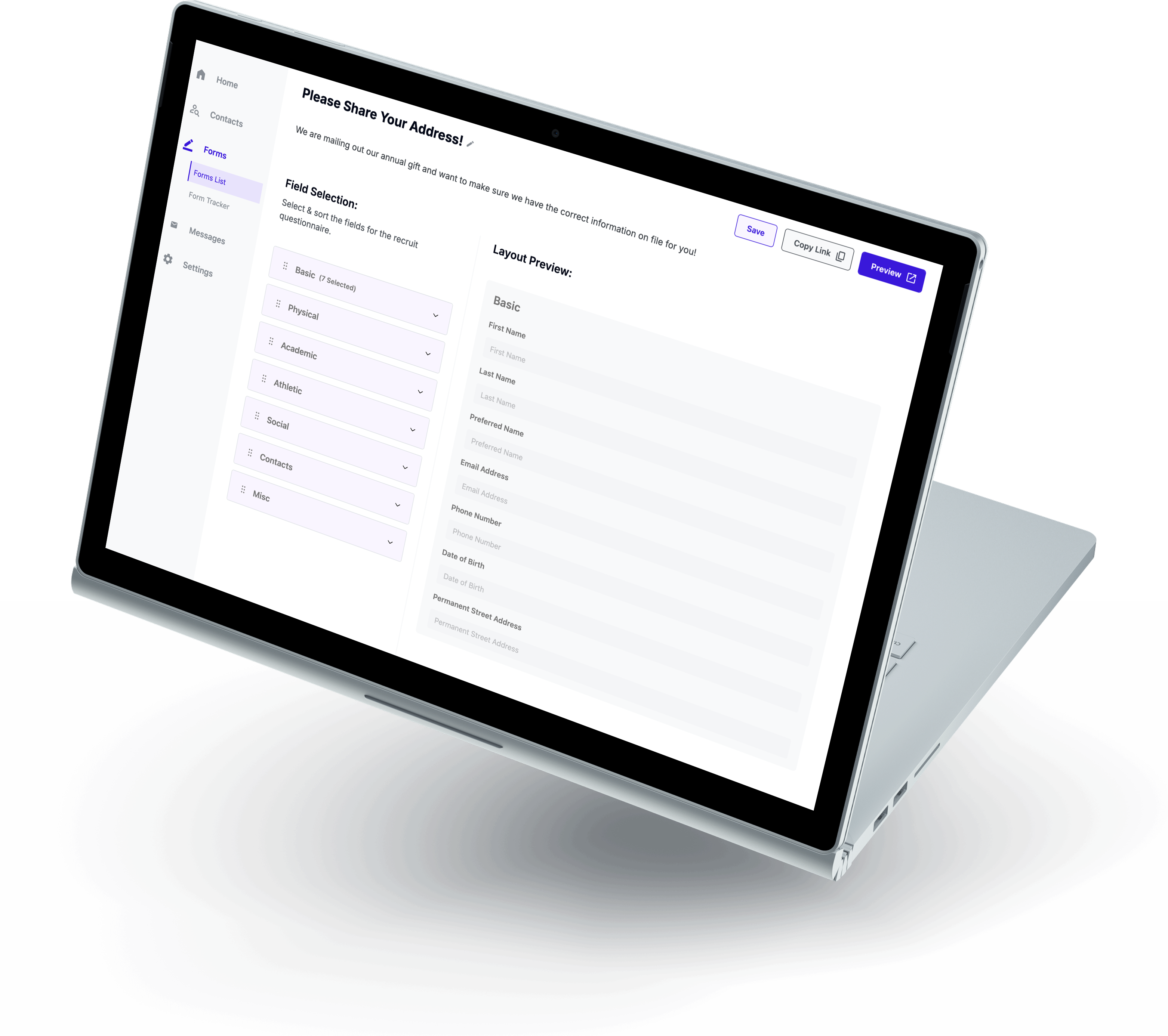
WinWon makes it easy to capture prospects the moment you meet them. Met a prospect at camp, on a visit, after a referral, or mid-conversation? Use QR codes and smart questionnaires to collect details instantly, and CoPilot turns that intake into a clean recruit profile without admin work.

Explore The Features  ⟶
AI-Powered Recruiting Follow-Up

Close Faster with AI Powered Next Steps Built In

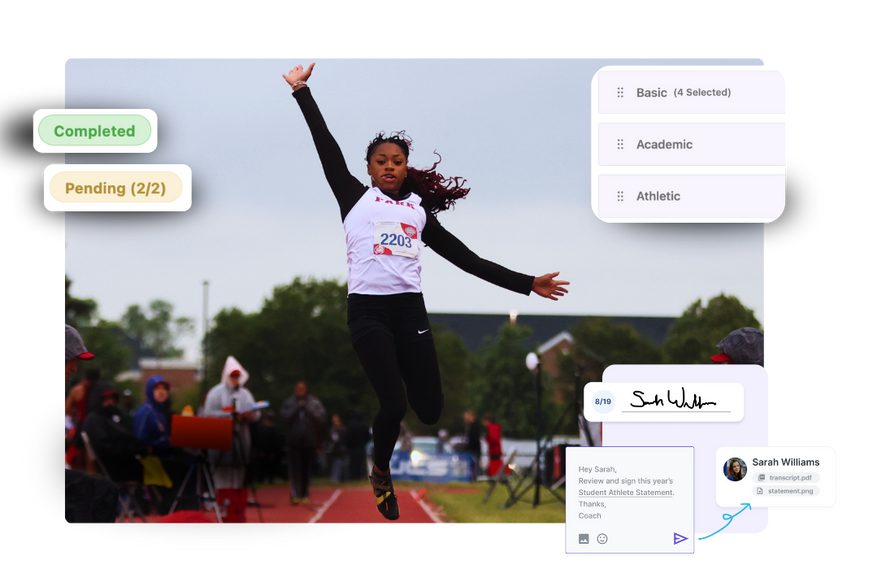
WinWon keeps recruiting moving by tying evaluations, notes, and next steps directly to each recruit, so coaches don't rely on memory to manage momentum. You get a clearer process for identifying who's real, who's pending, and exactly what needs to happen next.

Explore The Features  ⟶

Common Questions

See below for frequently asked questions and their answers.

How do college coaches find student-athlete recruits?
College coaches find recruits through multiple channels: high school and club coach relationships, recruiting camps and showcases, social media scouting (following relevant hashtags and prospect accounts), alumni networks, transfer portal databases, and referrals from current athletes. The most successful programs build systematic sourcing processes rather than relying on a single channel.
What's the best way to communicate with student-athlete prospects?
The best communication is personal and multi-channel. Text messages work for quick updates and maintaining regular contact. Phone calls build deeper relationships and allow for two-way conversation. Emails handle detailed information about academics and program culture. Social media keeps your program visible in recruits' daily feeds. The key is personalizing every touchpoint—generic mass messages get ignored.
How many prospects should I be recruiting per roster spot?
Most successful programs maintain tiered recruiting lists: 1-2 dream prospects, 3-5 primary targets, and 5-8 secondary options per position. This provides security if top targets commit elsewhere while still allowing genuine relationship building with your most important recruits. The exact ratio depends on your sport, division level, and typical commitment timelines.
How do I manage a recruiting pipeline with hundreds of prospects?
You need a centralized system that tracks contact details, evaluation notes, communication history, and recruitment status for every prospect. Categorize recruits by stage (identified, engaged, interested, committed) and position. Modern recruiting platforms help coaches visualize their entire pipeline, identify gaps by position, and automate follow-up reminders so no prospect falls through the cracks.
What makes a campus visit convert a prospect into a commitment?
Successful visits balance structure with authentic connection. Strategically pair prospects with current athletes who share similar backgrounds or interests. Don't rush academic meetings—parents heavily weigh academic support. Show functionality over flash in facility tours. Most importantly, follow up within 24 hours with personalized messages referencing specific moments from their visit, and continue regular contact adjusted to their decision timeline.
How has the transfer portal changed college recruiting?
The transfer portal compressed recruiting timelines dramatically. You're now evaluating college athletes with game film and stats, not just projecting high school talent. Windows can close in days or weeks instead of months. This requires faster evaluation processes, immediate outreach capability, and systems that help you identify which transfers actually fit your program versus just looking for any landing spot.
What's the biggest mistake college coaches make in recruiting?
Losing recruits to follow-through gaps. Coaches excel at identifying talent and making strong first impressions, but fail to maintain consistent communication and clear next steps. Prospects commit to programs that make them feel prioritized through regular, personalized contact. Without systems to manage hundreds of relationships simultaneously, even talented recruiters lose winnable recruits.

Read More Customer Stories

From conference-wide efficiency to on-campus transformation, discover how athletic departments across the nation are winning with WinWon.

Messaging

Real-time communication built
for athletics.

Read More  ⟶

Student Worker Schedules

Simplify every shift and keep coverage
clear.

Read More  ⟶

Full Mobile Suite

Manage your team anytime,
anywhere.

Read More  ⟶

Athlete Management

One source of truth for every
roster.

Read More  ⟶

Athlete Recruiting

Find talent, build relationships,
win more.

Read More  ⟶

Scheduling & Facility
Management

One calendar to replace them all.

Read More  ⟶

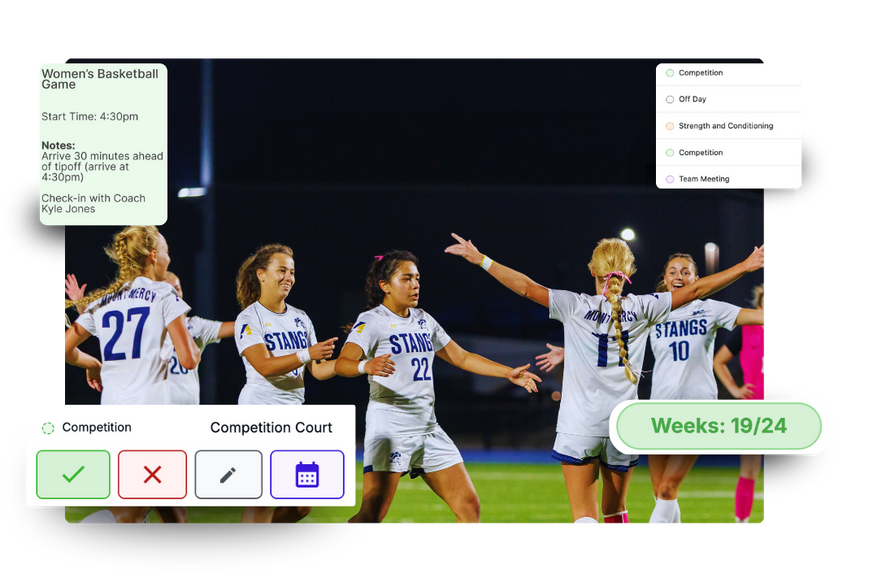
How Mount Mercy University Used The WinWon Calendar to Connect the Entire Department

Coaches juggled calendars across teams and apps. See how WinWon connected the entire department with one shared schedule.

Read More
How Southeastern University Centralized Medical Eligibility with WinWon

Medical eligibility and training data lived in silos. Find out how WinWon centralized it all for faster clearance and safer seasons.

Read More