Elora Passa Joins WinWon's Coach's Corner
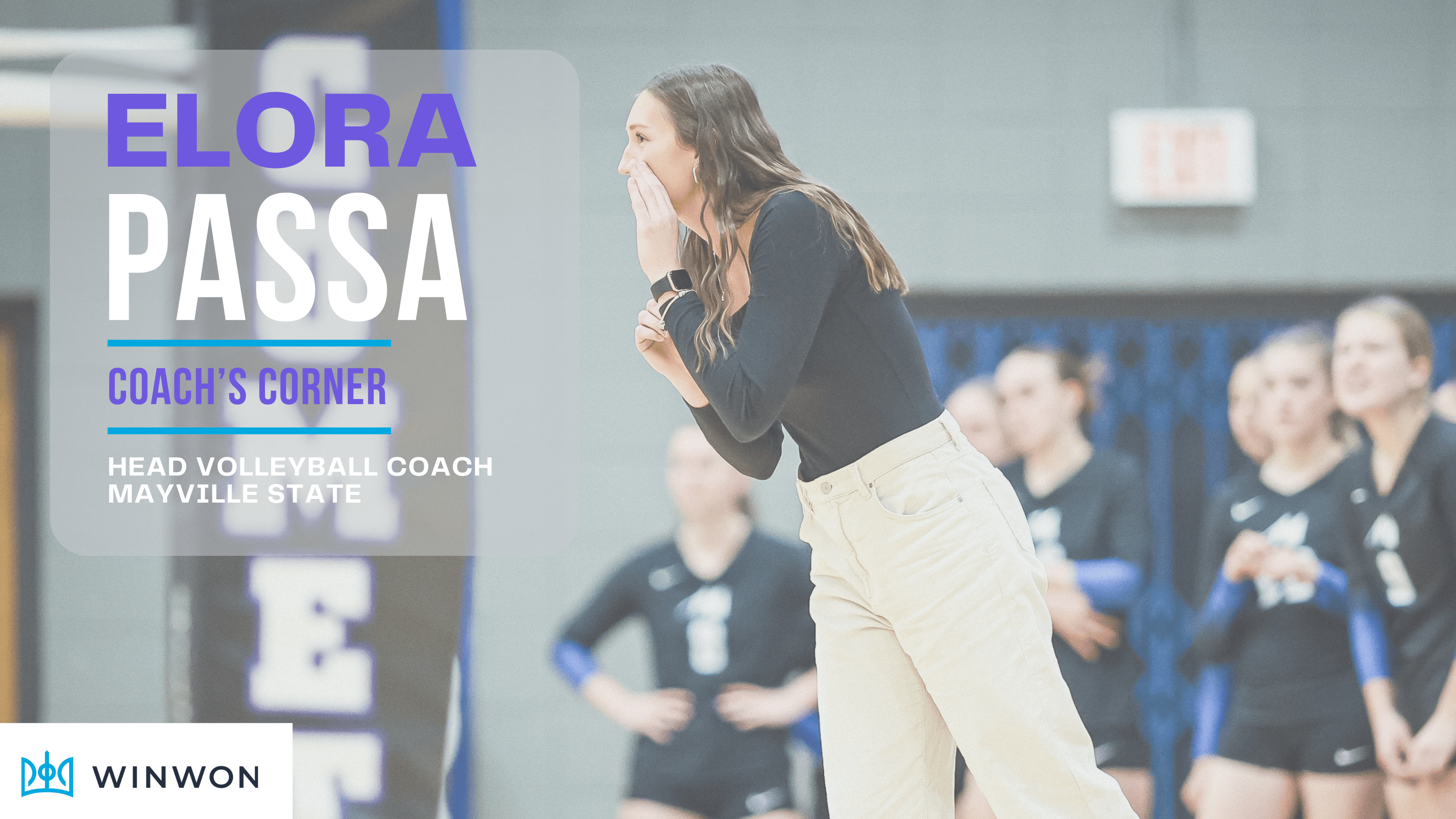
Elora Passa on Building Culture and Lifelong Connections at Mayville State
When Elora Passa talks about her journey to coaching, she doesn't start with her own playing career—she starts at the very beginning. "I've been in the gym since I was born," she says with a laugh. As the daughter of a college volleyball coach, Passa grew up immersed in the world of collegiate athletics, braiding hair on team buses and watching her mom lead North Dakota State College of Science's program.
That early exposure shaped everything. "They were great mentors for me," Passa recalls of those college athletes she looked up to as a kid. "They really showed me what it was like to be a college athlete—how to balance academics and athletics, how to carry yourself on the court."
Now, as the head coach at Mayville State University, Passa is paying that mentorship forward, building a program rooted in relationships, respect, and the kind of team-first culture that transcends wins and losses.
From Player to Coach: A Natural Evolution
Passa's path to coaching wasn't exactly linear, but it always felt inevitable. She went to college planning to become an elementary education teacher, envisioning a future coaching high school volleyball on the side. But after graduation, opportunities in college coaching opened up, and she found herself drawn back to the world she'd grown up in.
Today, she splits her time between coaching and teaching—a 50/50 role that lets her pursue both passions. She teaches six courses in the fall and five in the spring, focusing on sports sociology, while leading a volleyball program that includes both JV and varsity teams with over 30 athletes.
"It's the best of both worlds," she says. "I get to know my volleyball athletes, but also all the other students on campus. If I weren't in this role, I don't think I would have had that opportunity."
The Challenge of Connection at Scale
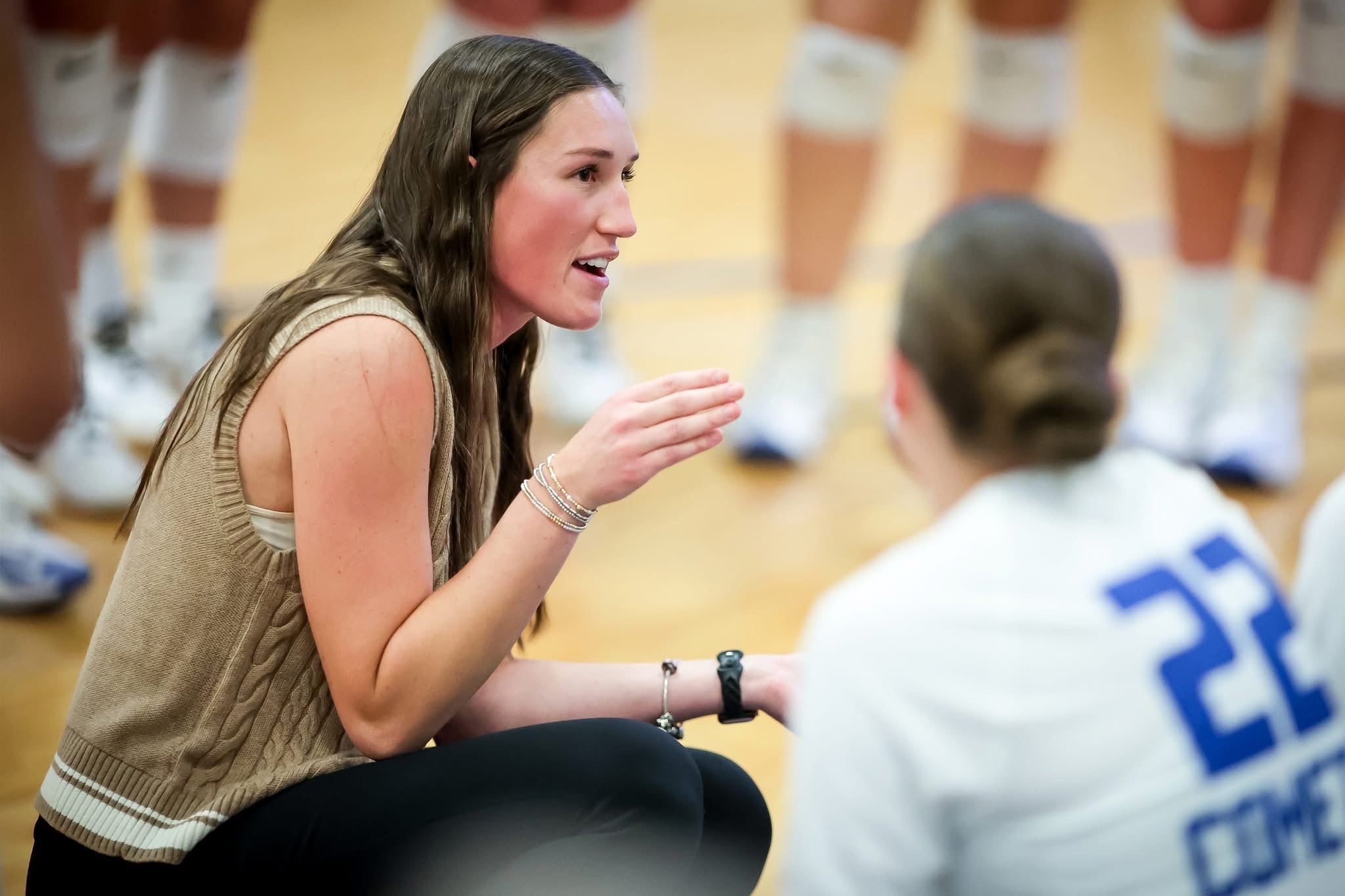
Managing relationships with 30-plus athletes isn't easy, but for Passa, it's essential. She set herself what she calls a "small goal"—one that proved more challenging than expected: talking to each athlete every single day.
"No matter the circumstances, I need to find a way to say, at a minimum 'Hey, how was class today?'" she explains. "It might be while they're warming up, it might be them coming by my office, but finding a way to at least say hi and make contact with each of them every single day."
That commitment to connection has created something special where every player feels seen.
Competition Breeds Intensity—and Support
One of the most remarkable aspects of Passa's program is how she's cultivated fierce competition alongside deep camaraderie. Athletes competing for the same position often become each other's biggest cheerleaders.
"Their biggest supporters are the people they're competing against," Passa notes. "You have three people fighting for two spots on the court, and they end up being the strongest bonds on the team. That comes from them knowing and understanding that they're each other's biggest cheerleaders."
This dynamic creates a culture of hunger, with younger players pushing to earn varsity minutes—and varsity players refusing to be outworked. "Competition breeds intensity," Passa says simply.
She points to a freshman this year who became the loudest player in the gym, challenging upperclassmen to step up their leadership. "That really drove our upperclassmen to say to themselves, 'I'm a captain, I'm a leader of this team, and I'm not going to be the quietest one in the gym compared to her.'"
Building Confidence Through Reps and Relationships
Like many coaches working with female athletes, Passa has noticed the confidence gap.
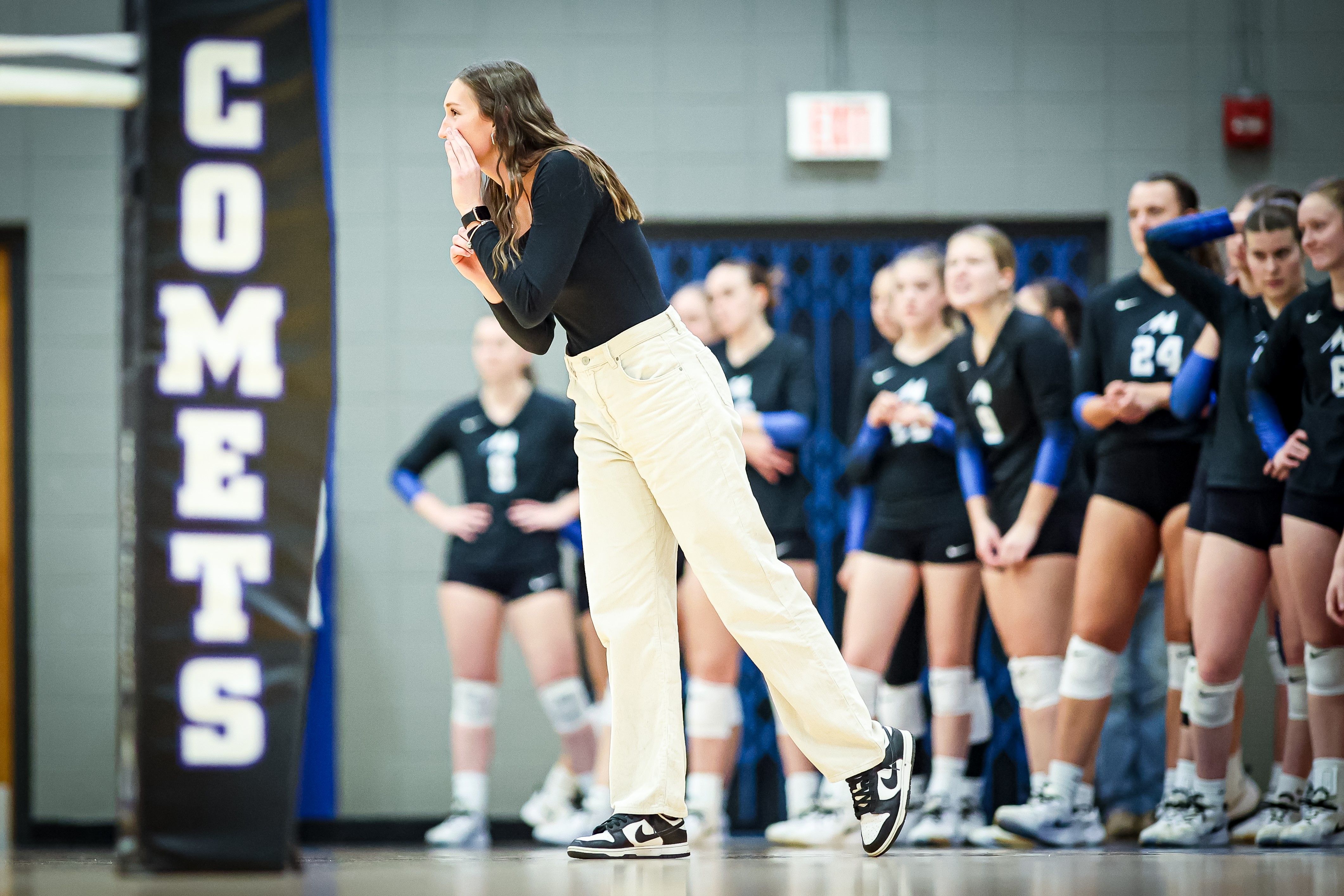
Her approach? Creating an environment where mistakes are not just tolerated but expected. "I tell them all the time in practice: make mistakes, take down the net when you're swinging. They have to know that making mistakes is okay."
That permission to fail—and the trust that comes with it—is crucial for athletes battling performance anxiety. "As a player, I wanted to know that if I made a mistake, I was going to be okay," Passa reflects.
Mayville State has also brought in a psychologist to help athletes develop mental game tools—coping mechanisms for those moments when the brain "completely shuts off" despite having done something successfully a thousand times in practice.
The Mayville State Difference
When asked what she wants recruits to know about Mayville State, Passa's answer centers on culture. "The biggest compliment I've heard from people on visits, from parents, is around our team culture,'" she says. "And I always put it back on the athletes. They do the work."
That culture matters especially in college athletics, where athletes spend countless hours together on buses, in hotel rooms, in dorms—often far from the family support systems they relied on in high school. "Being able to have conversation that's positive, kind, and respectful, whether it's about another teammate or about something you might be dealing with outside of volleyball—that really comes from them creating that culture together," Passa explains.
The program's motto reflects the university's broader mission as "the school of personal service." And while Passa acknowledges that some recruits initially balk at the lack of nearby Starbucks or Target, she's quick to remind them what really matters.
"It's about the people that you're around and the experiences and connections that you're making," she says. "At Mayville State, we really make an effort to create those lifelong relationships and lifelong connections. That is a shining moment for our university."
Looking Ahead
As Passa's program continues to grow—both in size and in competitive success—she remains focused on the fundamentals that matter most. Not just the technical skills of volleyball, but the life skills that will serve her athletes long after their playing days end.
Relationship building. Resilience. The ability to work with diverse personalities toward a common goal. Mental toughness. Team-first thinking.
"A very high percentage of female CEOs played competitive sports," Passa notes, referencing a statistic that captures why this work matters.
For the athletes who choose Mayville State, they're not just joining a volleyball program. They're joining a family that will challenge them, support them, and help them become the kind of people who can thrive anywhere.
Want to learn more about Mayville State volleyball? Connect with Coach Passa and explore opportunities to join a program where culture comes first and lifelong connections are built every day.
Keep up with WinWon
See below for recent news and follow us on social media @winwontech

WinWon Founder, Alex Hanley, Joins Inside Impact
Mount Saint Mary College Partners with WinWon to Strengthen Recruiting Structure and Department-Wide Pipeline Visibility